
Application Structure
Vla structures your backend with common patterns that enforce clean code dependencies: Layers, Modules and Interfaces.
Layers
Section titled “Layers”Vla organizes code into layers that flow in a single direction. Higher layers can use lower layers, but not vice versa.
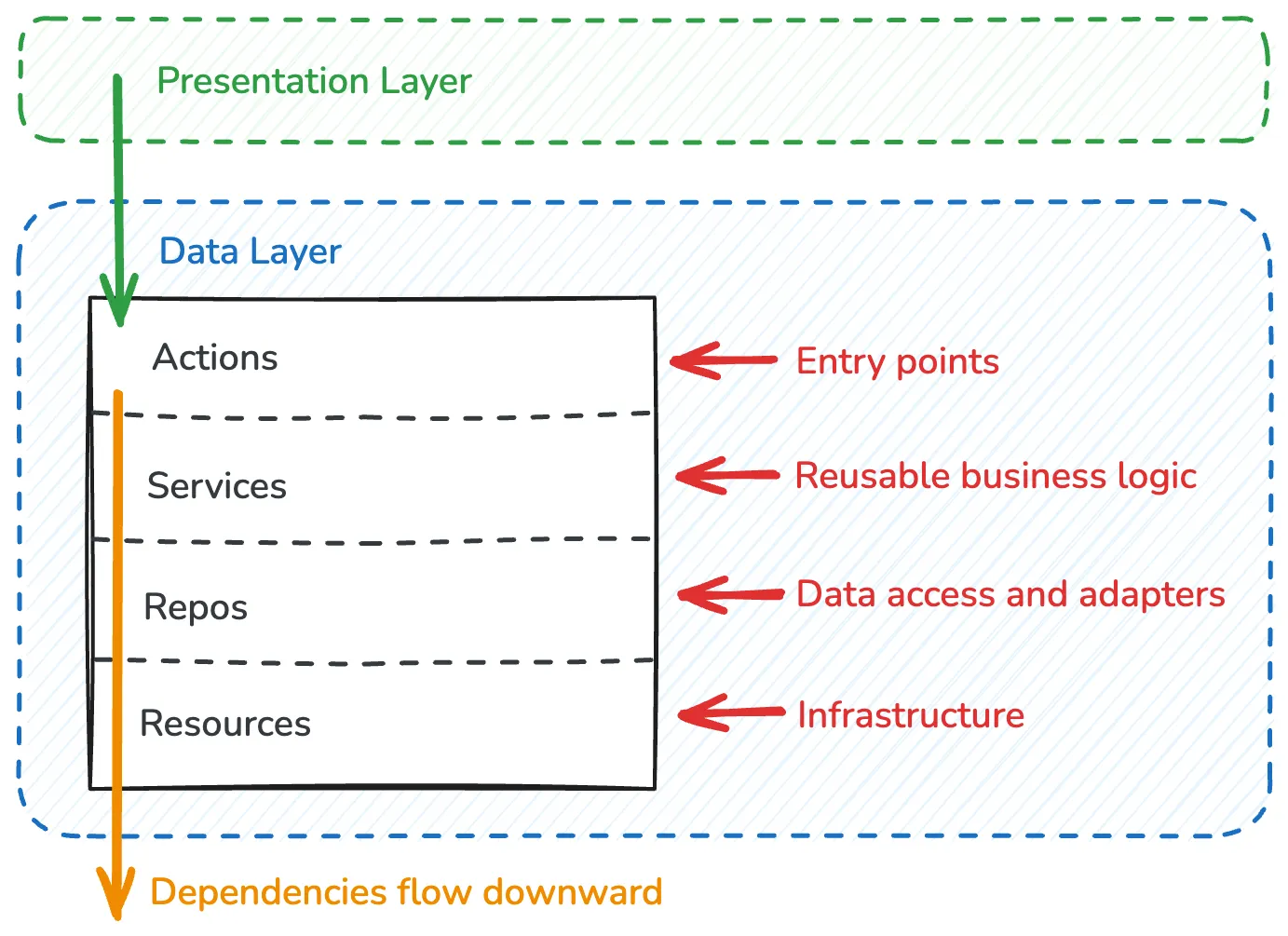
Each layer has its own concern and doesn’t need to know about other concerns.
| Layer | Concern |
|---|---|
| Actions | Entry points from your framework (routes, server functions, API endpoints). They are aware of the HTTP request, like bodies and response codes. |
| Services | Reusable business logic, orchestration and authorization. They are of the context, like a session, but not the HTTP request. |
| Repos | Data access for databases, external APIs and adapters. They are aware how to access data, but not of session context, authorization or business rules. |
| Resources | Long-lived infrastructure like database pools or HTTP clients. They provide a singleton and are not aware of the HTTP request or other request-based context. |
// ✅ Correct: Actions use Services, Services use Reposclass CreatePost extends Vla.Action {  service = this.inject(PostService)
  async handle(content: string) {    return this.service.create(content)  }}
class PostService extends Vla.Service {  repo = this.inject(PostRepo)  session = this.inject(SessionService) // Services can use other Services
  async create(content: string) {    const user = await this.session.currentUser()    return this.repo.create({ content, userId: user.id })  }}
class PostRepo extends Vla.Repo {  db = this.inject(Database)
  create = this.memo((data) => this.db.posts.create(data))}
// ❌ This would error: Repos cannot inject Servicesclass BadRepo extends Vla.Repo { service = this.inject(PostService) // ⛔ Error!}Modules
Section titled “Modules”Modules let you separate domains and maintain clear boundaries. Small apps might only need one module (or none at all: use Vla.Action, Vla.Service, etc.). Larger apps can create multiple modules.
const Users = Vla.createModule("Users")const Billing = Vla.createModule("Billing")const Analytics = Vla.createModule("Analytics")
// Modules can only access other modules through Facadesclass BillingService extends Billing.Service {  users = this.inject(UserFacade) // ✅ Facade from Users module
  // ❌ This would error: Can't inject Services from other modules  // userService = this.inject(UserService) // ⛔ Error!}
class UserFacade extends Users.Facade {  repo = this.inject(UserRepo)
  // Expose only what other modules need  async findById(id: string) {    return this.repo.findById(id)  }}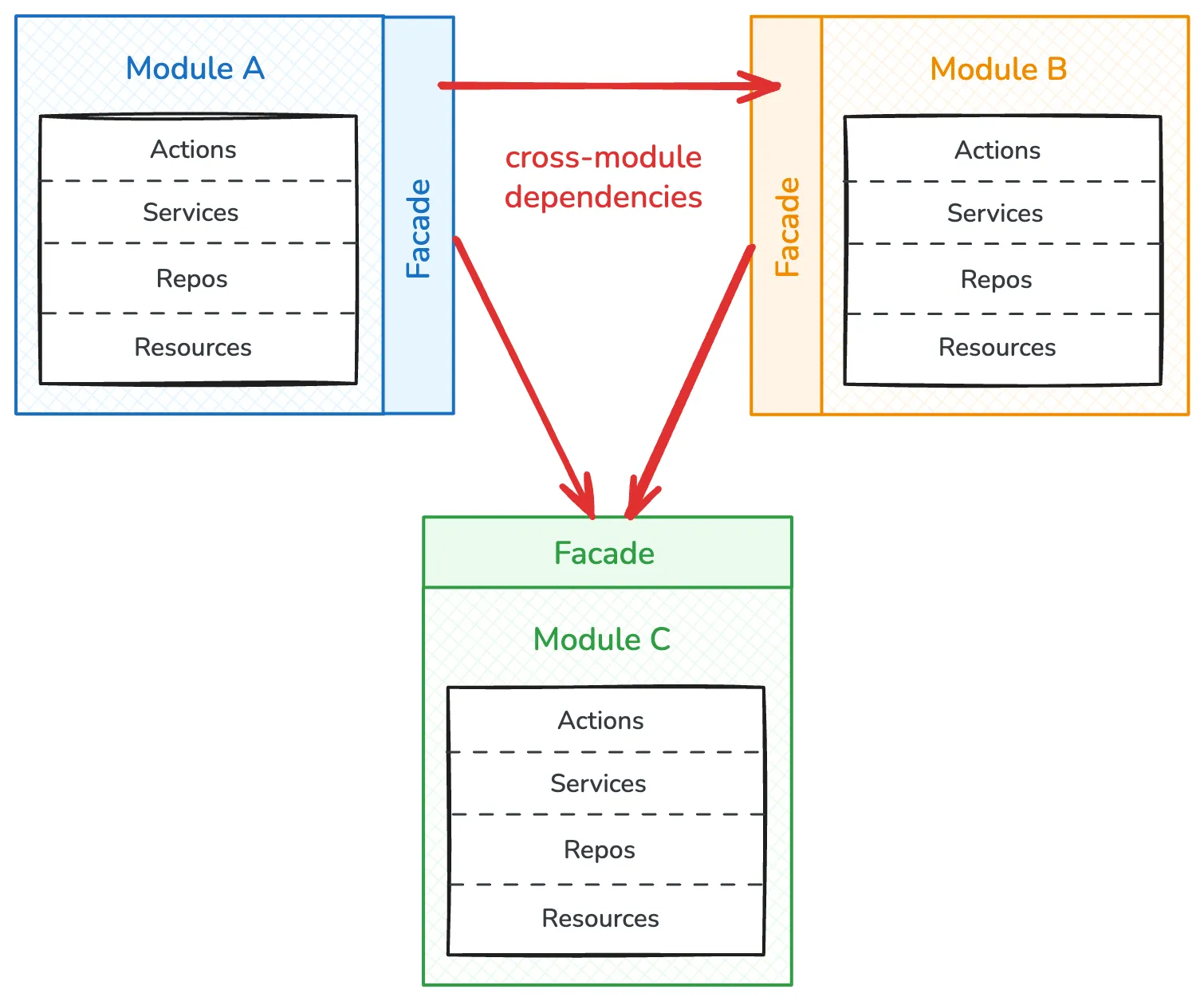
Interfaces
Section titled “Interfaces”Vla’s layers and modules implicitly result in better interfaces between code dependencies:
Facades are public interfaces for cross-module dependencies. They are like a contract to call code of a module from another module. Making breaking changes to a facade will likely cause other modules to fail.
Layers can have private and public methods. These methods are the interfaces for other layers within the same module.